We design, migrate and run cloud environments on AWS, Azure and Google Cloud, connected to the systems you already have, secured from day one and built to scale with you, without runaway bills.
- AWS, Azure and Google Cloud
- Secure landing zones
- Costs kept in check

69%
of UK firms had adopted cloud-based computing systems and applications (ONS, 2023)
The basics
What are cloud platforms?
Cloud platforms let you rent computing power, storage, databases and services from providers such as AWS, Microsoft Azure and Google Cloud, instead of buying and running your own servers.
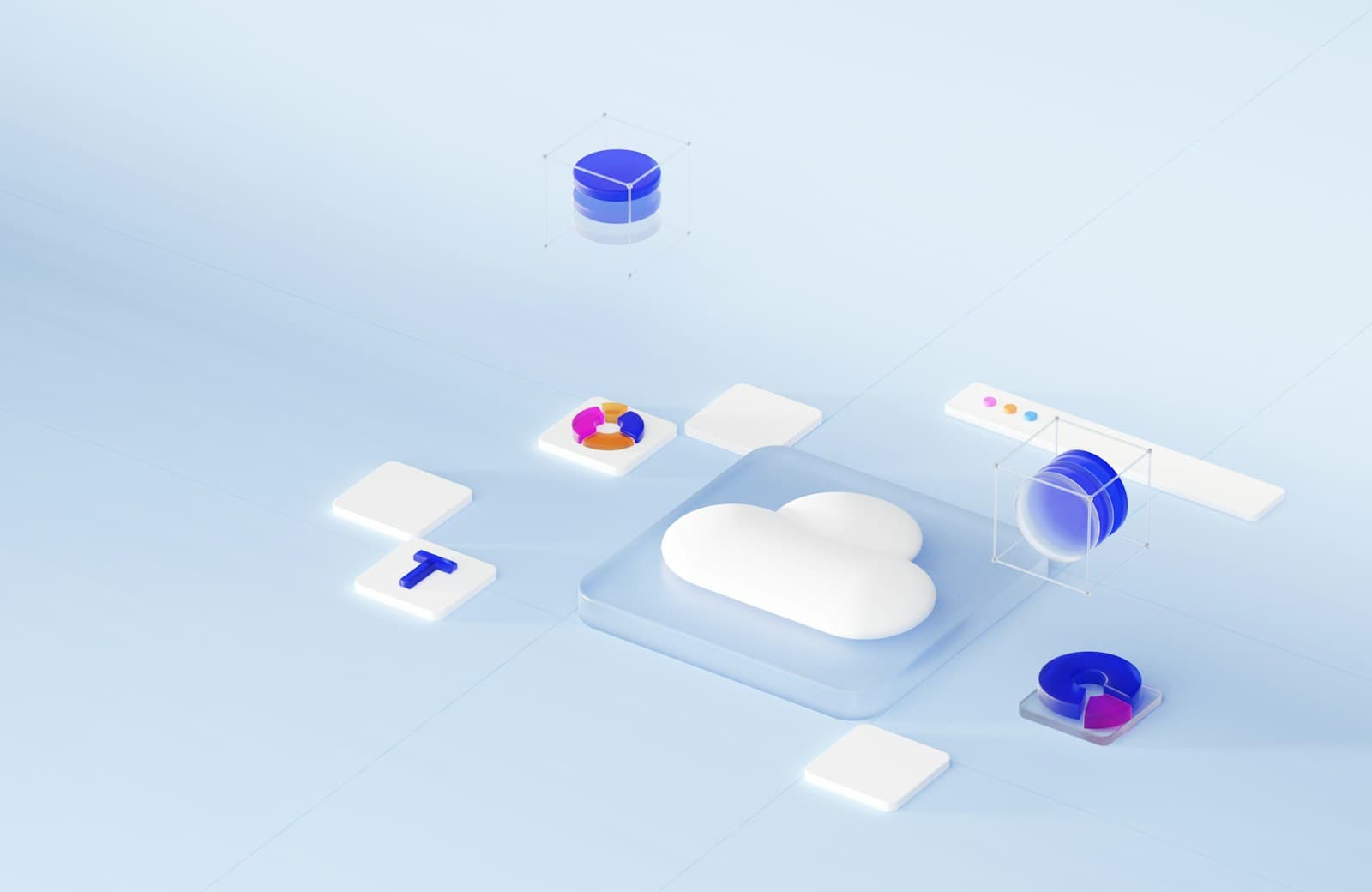
With cloud computing, the provider owns and operates the data centres, hardware and networking, and you use what you need over the internet, paying for it as you go. Services range from basic infrastructure, such as virtual machines and storage (infrastructure as a service, or IaaS), to managed platforms for databases, containers and AI (platform as a service, or PaaS), to complete applications delivered as software as a service (SaaS). Because capacity can be added or removed in minutes, you can scale up for peak demand, test new ideas quickly and stop paying for hardware that sits idle.
Getting real value from the cloud takes more than moving servers across. A well-run cloud environment starts with a secure landing zone: the accounts, networks, identity controls, logging and guardrails every workload sits within. Workloads are then migrated in the way that suits each one, from a straight 'lift and shift' to re-architecting into cloud-native services. Infrastructure is defined as code so it's repeatable and auditable, resilience is designed across multiple zones, and FinOps practices keep spending visible and under control. Many organisations run a hybrid or multi-cloud estate, connecting cloud services to systems that stay on-premises.
- A
Cloud services
On-demand compute, storage, databases, networking and AI from the major providers, paid for as you use them.
Example: A new environment for testing is created in minutes, not weeks.
- +
Cloud engineering
Secure architecture, infrastructure as code, automation and cost management that make those services work for your business.
Example: Unused resources are switched off automatically overnight.
- =
A cloud platform
A secure, well-governed foundation that scales with demand, recovers from failure and keeps costs predictable.
Example: Traffic doubles on launch day and the service scales without anyone noticing.
The cloud today
Cloud is now the default, and cost control the challenge
Most UK firms already rely on the cloud. The challenge has moved on from whether to adopt it to how to run it securely and without overspending.
69%
of UK firms had adopted cloud-based computing systems and applications in 2023 (ONS)
84%
of organisations say managing cloud spend is their top cloud challenge (Flexera, 2025)
17%
is how far cloud budgets are already exceeding their limits, on average (Flexera, 2025)
72%
of organisations now use generative AI cloud services, up from 47% a year earlier (Flexera, 2025)
Cloud is the most widely adopted technology in UK firms
Cloud-based systems and applications are used by more UK firms than any other technology the ONS measured, ahead of specialised software and far ahead of AI and robotics.
Source: ONS, Management practices and the adoption of technology and AI in UK firms: 2023 (March 2025)
| Technology | Share |
|---|---|
| Cloud | 69% |
| Software | 61% |
| Equipment | 36% |
| AI | 9% |
| Robotics | 4% |
Common challenges
Where cloud goes wrong
Cloud can be transformative, but without the right foundations it can also be expensive and risky. These are the problems we fix most often.
Runaway costs
Oversized resources, forgotten environments and no clear view of who is spending what.
Security misconfigurations
Public storage, over-privileged accounts and missing logging that attackers look for first.
Cloud sprawl
Accounts and subscriptions created ad hoc, with no consistent structure, tagging or guardrails.
Lift and shift regret
Workloads moved as-is that cost more in the cloud than they did on-premises.
Fragile deployments
Manual changes, no infrastructure as code and single points of failure in production.
Skills gaps
Teams stretched across fast-changing services, without the time to keep up.
What's included
From strategy to day-to-day operations
Whether you're starting out, mid-migration or already in the cloud and struggling, we'll meet you where you are.

Cloud strategy and readiness
Business case, platform choice and a roadmap based on your workloads and goals.
Landing zones and governance
Secure account structure, networking, identity, logging and policy guardrails.
Migration
Workloads moved in planned waves, from lift and shift to full re-platforming.
Cloud-native architecture
Containers, serverless and managed services designed for scale and resilience.
Infrastructure as code
Terraform-defined environments that are repeatable, reviewable and auditable.
DevOps and automation
CI/CD pipelines and automated operations that make releases safe and routine.
Cost optimisation and FinOps
Right-sizing, reservations, tagging and reporting that keep spend under control.
Cloud security
Posture management, identity hardening, encryption and continuous monitoring.
Managed cloud operations
Monitoring, patching, backup and support with agreed response times.
- Google Cloud
- Cloudflare
- DigitalOcean
- Hetzner
- Terraform
- Pulumi
- Ansible
- Docker
- Kubernetes
- Helm
- Argo
- Istio
- Grafana
- Prometheus
- Datadog
- New Relic
- Elastic
- Snowflake
- Databricks
- PostgreSQL
- MongoDB
- Redis
- Apache Kafka
- NGINX
- HashiCorp
- GitHub Actions
Technologies
Cloud platforms and tools we work with
As an AWS Partner Network member we have deep AWS experience, and we also work across Azure and Google Cloud. We recommend the platform that fits your workloads, skills and existing contracts.
01
Cloud providers
Hyperscale and specialist providers for every kind of workload.
- AWS
- Microsoft Azure
- Google Cloud
- DigitalOcean
- Hetzner
- OVH
02
Infrastructure as code
Environments defined in code, so they're consistent, reviewable and repeatable.
- Terraform
- Pulumi
- Ansible
- Packer
- Helm
03
Containers and platforms
Running modern applications reliably at any scale.
- Docker
- Kubernetes
- Argo
- Istio
- NGINX
04
Observability
Metrics, logs and traces that show how systems are really performing.
- Datadog
- Grafana
- Prometheus
- New Relic
- Elastic
05
Data and AI platforms
Managed data services for analytics, streaming and AI workloads.
- Snowflake
- Databricks
- BigQuery
- PostgreSQL
- MongoDB
- Apache Kafka
06
Security and edge
Protecting cloud workloads, secrets and the traffic that reaches them.
- Cloudflare
- HashiCorp
- Okta
- Palo Alto Networks
- Snyk
Product names and logos are trademarks of their respective owners and are shown to illustrate the technologies available. Their use does not imply endorsement or partnership.
The benefits
What a well-run cloud brings to your organisation
Scale on demand
Capacity that grows and shrinks with your business, automatically.
Predictable spend
Clear cost visibility, budgets and savings you can see month to month.
Resilience
Services designed across multiple zones, with tested backup and recovery.
Faster delivery
New environments in minutes and automated, low-risk releases.
Stronger security
Consistent guardrails, encryption and monitoring across every account.
Ready for AI
Scalable data foundations for analytics and AI workloads.
AI is driving the next wave of cloud use
Use of generative AI services in the cloud jumped in a single year. AI workloads can be costly, which makes good architecture and cost governance more important than ever.
Source: Flexera, 2025 State of the Cloud Report (March 2025)
| Year | Share |
|---|---|
| 2024 | 47% |
| 2025 | 72% |
Standards and good practice
Built on recognised cloud frameworks
We design and review cloud environments against the providers' own frameworks and independent security guidance.
AWS Well-Architected Framework
Six pillars: operational excellence, security, reliability, performance, cost and sustainability.
Azure Well-Architected Framework
Microsoft's guidance for building reliable, secure and cost-effective workloads on Azure.
Google Cloud Architecture Framework
Google's best practice for designing and operating workloads on Google Cloud.
NCSC Cloud Security Principles
The National Cyber Security Centre's 14 principles for evaluating and using cloud services securely.
CIS Benchmarks
Consensus-based secure configuration standards for cloud accounts and services.
FinOps Framework
The FinOps Foundation's practices for managing cloud cost as a shared responsibility.
ISO/IEC 27017
The international code of practice for information security controls in cloud services.
UK GDPR and data residency
Personal data kept in the right regions, protected and processed lawfully.

The business perspective
What leaders are weighing up
Cloud decisions affect cost, risk and speed for years. These are the questions we help leadership teams answer.
What will it really cost?
Not just the monthly bill, but migration, skills, licences and the cost of doing nothing.
Which workloads should move?
Some gain a lot from the cloud, while others are better left where they are.
How do we avoid lock-in?
Using open standards and portable designs where it matters.
Who's accountable?
Clear ownership of security, spend and operations across teams and suppliers.
Getting started
How to move to the cloud with confidence

- 1
Know your estate
Inventory applications, dependencies, data and costs before you move anything.
- 2
Build the foundations
Set up a secure landing zone with identity, networking, logging and guardrails.
- 3
Choose the right path
Decide per workload: rehost, re-platform, refactor, replace or retire.
- 4
Migrate in waves
Start with lower-risk workloads, learn, then move the critical ones.
- 5
Optimise continuously
Right-size, automate and review costs and security every month.
Our approach
How we deliver cloud platforms
Our approach follows the cloud providers' own adoption frameworks, adapted to your goals, timescales and appetite for change.
- 01
Assess
Understand your workloads, costs, skills and readiness, and build the business case.
You get: A migration plan and cost model
- 02
Foundation
Build a secure, well-governed landing zone with everything defined as code.
You get: A production-ready cloud foundation
- 03
Migrate
Move workloads in tested waves, modernising where it pays off.
You get: Workloads running in the cloud
- 04
Operate
Monitor, patch, back up and support your environment day to day.
You get: A stable, secure platform
- 05
Optimise
Review cost, performance and security, and act on what we find.
You get: Lower spend and a stronger posture over time
Why Anthrasec
Why choose Anthrasec for cloud
AWS Partner Network member
Deep AWS experience, alongside Azure and Google Cloud.
Security-first
Cloud security built into every design, from people who specialise in it.
Cost-conscious by default
We design for efficiency and show you where every pound goes.
Everything as code
Repeatable, documented environments that you own and understand.
One team end to end
Applications, infrastructure, workplace and security from the same partner.
With you after migration
We run, support and keep improving your platform.

Common questions
Cloud platforms, answered
Which cloud provider should we choose: AWS, Azure or Google Cloud?
All three are secure and capable. The right choice depends on your workloads, existing licences (for example Microsoft agreements), in-house skills and specific services you need. We're an AWS Partner Network member and also work with Azure and Google Cloud, and we'll recommend what genuinely fits.
Is the cloud cheaper than running our own servers?
It can be, but not automatically. Savings come from right-sizing, turning off idle resources, using managed services and committing to usage where it makes sense. We model costs before you migrate and put FinOps practices in place so spend stays under control.
What is a cloud landing zone?
A landing zone is the secure, pre-configured foundation that every workload runs in: the account structure, networking, identity and access, logging, security controls and policies. Getting it right first makes everything that follows safer and faster.
How long does a cloud migration take?
A handful of workloads can move in weeks. Larger estates are migrated in waves over several months. We start with lower-risk systems so the team builds confidence before moving critical ones.
Is our data secure and kept in the UK?
The major providers offer UK regions and strong security, but configuration is your responsibility. We set up encryption, access controls, logging and region restrictions so your data stays where it should and is protected.
What is FinOps?
FinOps is the practice of managing cloud costs collaboratively between finance, technology and business teams. It combines cost visibility, accountability and continuous optimisation, so you get the most value from every pound spent in the cloud.
Can we keep some systems on-premises?
Yes. Many organisations run a hybrid model, keeping some systems on-premises or in a private data centre and connecting them securely to the cloud. Our infrastructure team designs and supports both sides.
Work with us
Ready to work with Anthrasec?
Let's schedule a meeting.
Pick a time that suits you and tell us a little about what you need. We'll come prepared, with the right people in the room.
Step 1 of 4
Choose a date and time
October 2026
Checking availability…
Times are shown in UK time (London). Meetings are held on Microsoft Teams.
Available times
Choose a date to see available times.